
You don’t need a massive budget or a degree in interior design. Just a few clever purchases and your spare room can look like the VIP section of a club.
There’s a specific moment when you walk into a room and the lighting just hits. Everything looks better. Everyone looks better. The vibe shifts from “we’re in someone’s house” to “we’re somewhere.” And the good news is that creating that feeling is surprisingly cheap and easy.
Whether you’re setting up for a party, building a permanent vibe in your bedroom, or just want your flat to look less like a show home and more like somewhere people actually enjoy being, lighting is the single most transformative thing you can do to a space. More than furniture, more than paint, more than anything.
Here’s everything that works and where to get it.
LED Strip Lights: The Foundation
If you’ve scrolled through TikTok or Instagram in the last three years, you’ve seen LED strip lights in action. They’re everywhere for a reason. They’re cheap, easy to install, and they fundamentally change how a room feels.
The best placement is behind things rather than on them. Behind your TV, behind a desk, along the back edge of a shelf, under a bed frame. The indirect light creates a glow that’s way more atmospheric than having the strips visible.
For quality, you get what you pay for, but even the mid-range options are decent. Argos does a good range of Govee strips that are app-controlled and can sync to music, which is brilliant for parties. Expect to pay about 20 to 30 quid for a set that’ll cover a decent sized room.
If you want to level up, the Philips Hue gradient strips from Currys are the premium option. They display multiple colours across the length of the strip, which creates a much more dynamic look. They’re pricier, around 60 to 100 quid depending on length, but the difference in quality is noticeable.
One tip: get strips with a warm white option as well as colours. Full RGB colour mode looks great for parties, but for everyday use you’ll want a warm white setting that doesn’t make your room look like a nightclub on a Tuesday afternoon.
Neon Signs: Instant Character
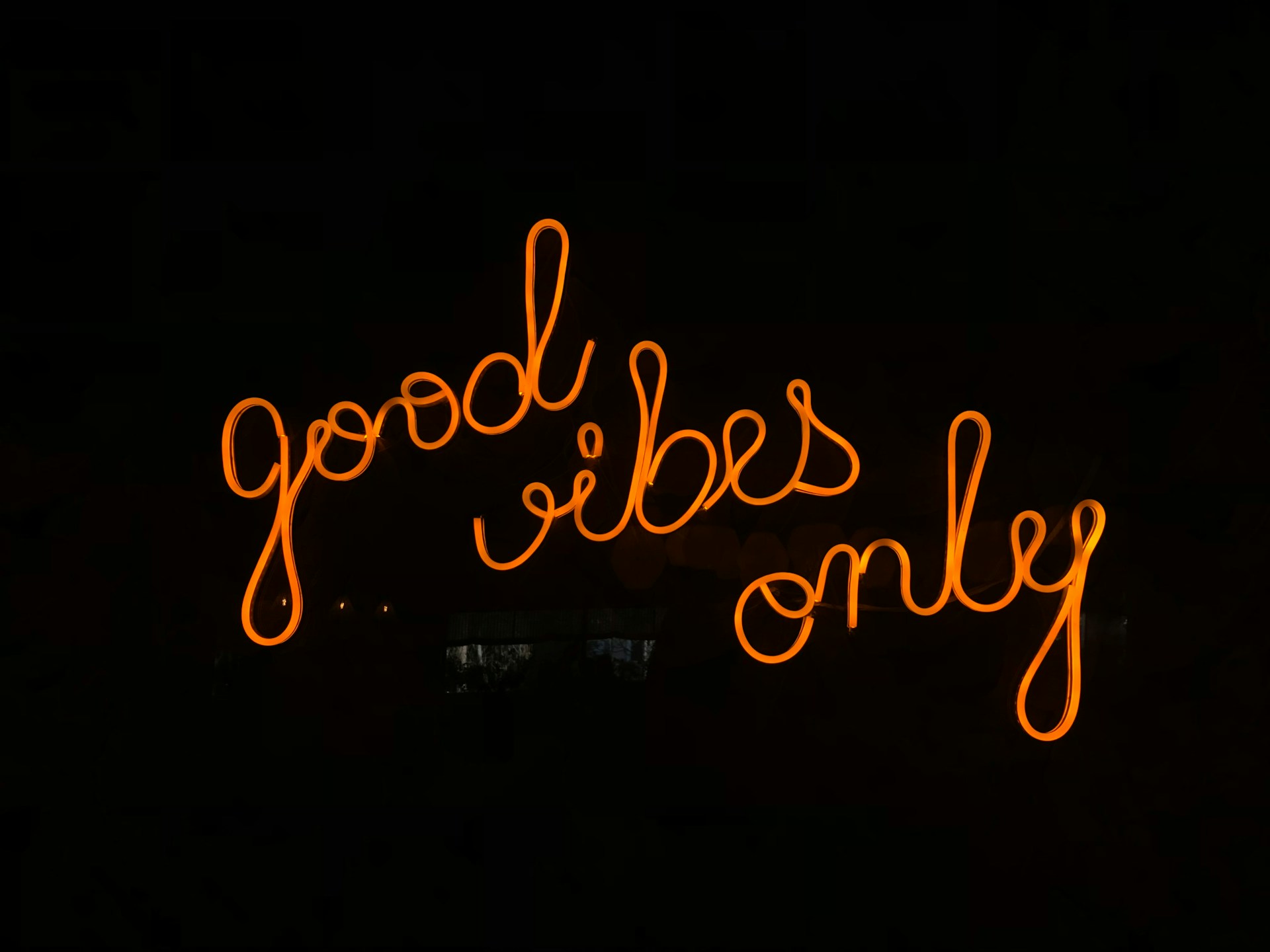
A neon sign on a wall is one of those things that just works. It adds a focal point to any room and creates a soft, warm glow that photographs incredibly well (if that matters to you, and let’s be honest, it probably does).
Real neon is expensive and fragile. What most people buy now is LED neon flex, which looks almost identical but is cheaper, lighter, and won’t shatter if you knock it. You can get custom ones made with any word or phrase from sellers on Etsy and Amazon, usually for between 40 and 80 quid depending on size.
Pre-made options are even cheaper. A simple “good vibes” or a lightning bolt or a cocktail glass sign from Argos or Amazon will cost you about 20 to 30 quid. Mount it on the wall behind your sofa or above a bar area and it instantly becomes the centrepiece of the room.
If you’re into making your own stuff, this pairs well with other creative home projects. Our DIY home crafts guide has some ideas that would complement a neon setup nicely.
Galaxy Projectors: Surprisingly Not Tacky
Bear with me on this one. Galaxy projectors sound like something you’d buy for a kid’s bedroom, and some of them definitely look that way. But the good ones? They’re genuinely impressive.
A quality galaxy projector fills your ceiling and walls with slowly moving nebula patterns and star fields. In a dark room with some music playing, the effect is properly immersive. It’s the kind of thing where people walk in and immediately say “that’s sick” while staring at the ceiling for five minutes.
The BlissLights Sky Lite Evolve is one of the best options. It projects a combination of laser stars and LED nebula clouds that look genuinely beautiful. It runs about 50 to 70 quid and the quality is noticeably better than the cheap Amazon knock-offs.
For parties, set it to a colour that matches your LED strips and the whole room ties together. For everyday use, the blue and green settings are actually quite calming. More than one person has told me they fall asleep to their galaxy projector running, which I initially thought was weird but have since tried and completely understand.
Disco Balls: The Classic That Never Dies
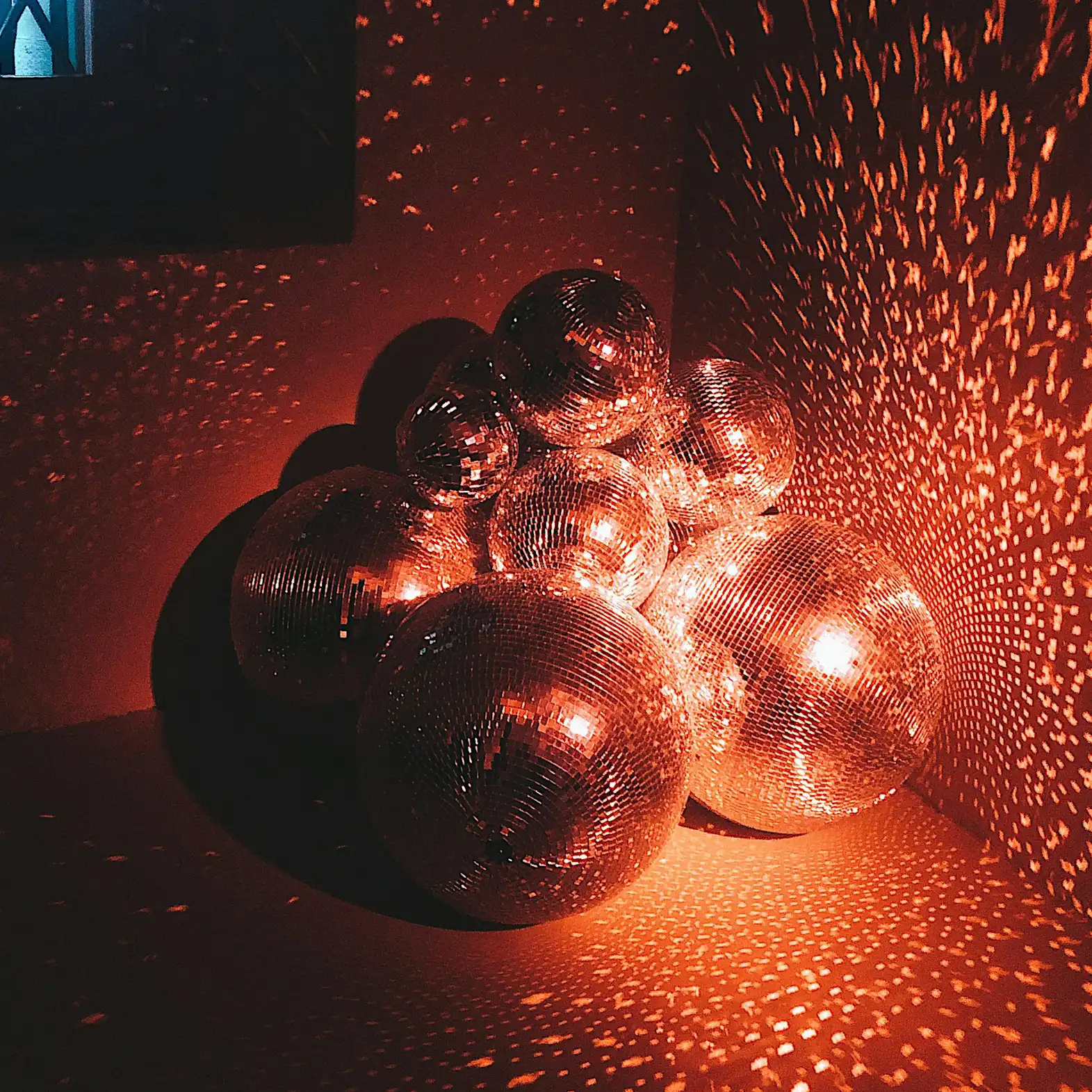
A disco ball is the oldest trick in the book and it still works perfectly. Nothing else creates that specific scattered-light effect that makes a room feel alive.
You’ve got two options. A proper hanging disco ball (the mirror-tiled kind) that you pair with a spotlight, or a rotating disco ball light that projects the pattern itself. Both work, but for different situations.
The hanging ball is better for a permanent installation. Hang it from the ceiling, point a lamp at it, and you’ve got a constant gentle light scatter that looks amazing even when it’s not party time. You can get a decent sized one for about 10 to 15 quid from Amazon.
The motorised rotating ones are better for parties because they’re plug-and-play. Stick it in the corner, turn it on, done. Most of them have multiple colour modes and some sync to music via a built-in mic. You can find them at Argos for around 15 to 25 quid.
The pro move: combine a disco ball with your LED strips set to a complementary colour. The combination of the strips’ ambient glow and the disco ball’s scattered reflections genuinely makes a living room feel like a proper venue.
Smart Bulbs: Underrated and Useful
Swapping your regular bulbs for smart ones is one of the easiest wins in this whole list. You keep your existing lamps and light fittings but gain full control over colour, brightness, and scheduling from your phone.
Philips Hue is the gold standard but also the most expensive. A starter kit with a bridge and a few bulbs from John Lewis will set you back about 80 to 100 quid. But once you’re in the ecosystem, adding bulbs is easy and the app control is excellent.
If that’s too rich, LIFX bulbs work without a hub (they connect directly to your WiFi) and the colour quality is genuinely excellent. They’re about 30 to 40 quid per bulb from Currys, which isn’t cheap but isn’t Hue-level either.
The budget option is the TP-Link Tapo range. Around 10 to 15 quid per bulb, they connect to WiFi, have a decent app, and the colour range is surprisingly good for the price. You won’t get the same richness as Hue or LIFX, but for most people the difference is marginal.
The real value of smart bulbs is being able to set scenes. A “chill” setting with warm amber tones for a quiet evening. A “party” setting with deep purples and blues for when people come over. A “focus” setting with bright white for when you need to actually see what you’re doing. Switching between them with one tap on your phone is genuinely useful, not just a gimmick.
Putting It All Together
The trick to making a room look properly impressive is layering. No single product does it alone. But the combination of LED strips providing ambient colour, a neon sign creating a focal point, smart bulbs adding depth, and maybe a disco ball or galaxy projector for movement, that combination is what creates the “wow” factor.
You don’t need everything at once. Start with LED strips (biggest impact for the least money), add a neon sign or smart bulbs next, and build from there. Even just the strips alone will make a noticeable difference.
And the total cost? You can do a genuinely impressive setup for under 100 quid if you shop smart. LED strips (25 quid), a neon sign (25 quid), a disco ball (15 quid), and a couple of budget smart bulbs (25 quid). That’s a room transformation for less than a night out.
A Few Warnings
Don’t go overboard. A room with every single lighting effect running at once looks like a branch of Currys, not a club. Pick two or three elements and let them work together. Less is more once you’ve got the basics covered.
Avoid cheap unbranded electrical products from random Amazon sellers. Lighting products connect to your mains electricity, and dodgy ones are a genuine fire risk. Stick to known brands or buy from reputable retailers like Argos, Currys, or John Lewis where the products meet UK safety standards.
And finally, consider your neighbours. If you live in a flat with thin walls, a room full of neon and a booming speaker at midnight might cause issues. The lighting itself is silent, obviously, but it does tend to encourage the kind of behaviour that isn’t.
The Bottom Line
Good lighting is the cheapest, easiest, and most effective way to make any room feel special. Whether you’re hosting people, creating a space to relax in, or just want your room to look better in photos, a bit of LED, a touch of neon, and some smart colour control will get you there. It’s not complicated, it’s not expensive, and the difference it makes is genuinely massive. Get on it.