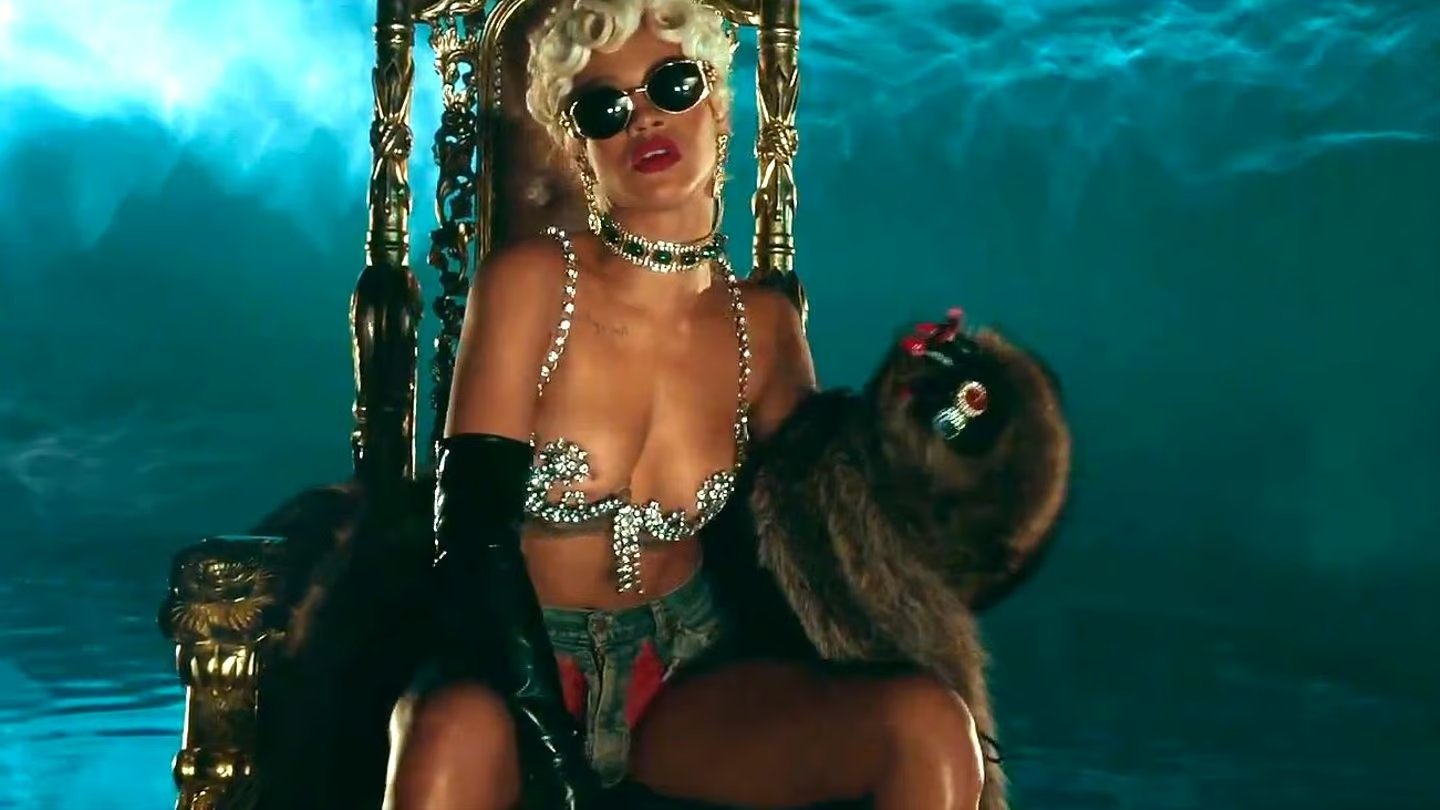
When Pour It Up dropped in October 2013, Flavourmag asked whether Rihanna had gone too far. A decade on, the answer says more about 2013 than it does about her.
Some archive headlines are worth revisiting honestly. When Rihanna released the video for Pour It Up, all throne, dollar bills, pole choreography and that red G-string finale, this site, like most of the pop press, asked the question of the season: has she gone too far? It was the autumn of 2013, the autumn of peak twerk-panic. Miley Cyrus had just detonated the VMAs and stripped off for Wrecking Ball; every second music video seemed engineered for maximum pearl-clutching, and commentators were busily ranking which star had crossed which line.
What we were actually watching
Looked at now, Pour It Up plays very differently. The video is stark, controlled and entirely on Rihanna’s terms, no male gaze stand-in, no narrative excuse, just the artist styling her own image of wealth and power and daring you to have an opinion about it. The pole work that scandalised 2013 has since been widely reappraised as athletic artistry; pole performance now fills theatres and Instagram feeds without anyone reaching for the smelling salts.
The question aged; she didn’t
The ‘too far?’ framing assumed there was a line drawn somewhere above pop stars, and that women in music needed permission to cross it. Rihanna’s entire subsequent decade, the albums on her own schedule, the billion-dollar businesses, the refusal to explain herself, reads as a long answer to that question. She wasn’t going too far; she was going exactly where she intended, and the culture eventually caught up and followed her there.
Why we’re keeping this page
We could quietly delete the old take. We’d rather own it. The 2013 conversation around Pour It Up is a perfect time capsule of how pop culture policed its women, and how completely an artist can win that argument by simply carrying on. The video remains one of Rihanna’s most-watched, most-referenced visuals, and the only thing that genuinely dates it is the debate it caused.